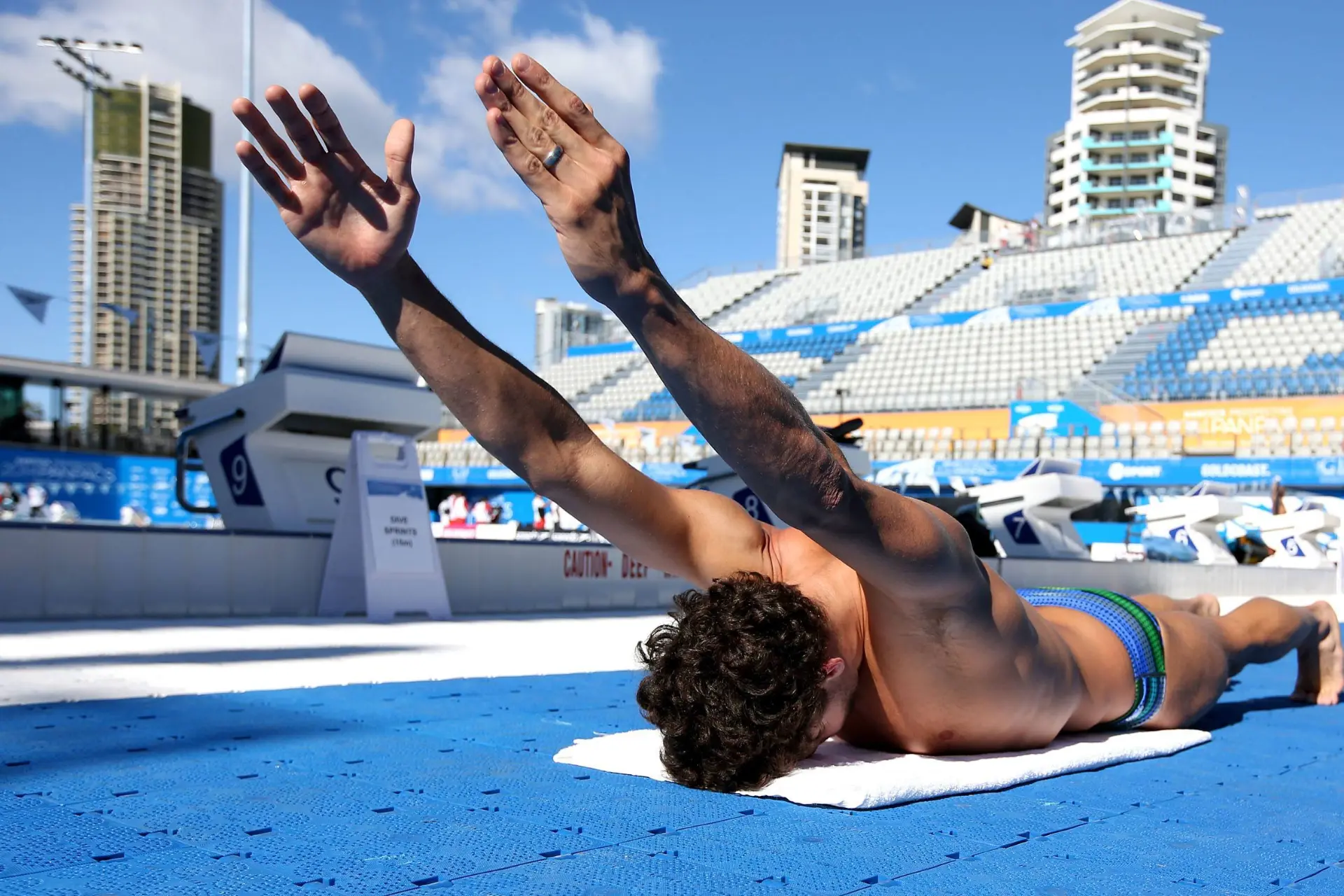
Reach the streamline
The fastest swimmers hold a tighter, longer line. Overhead shoulder and thoracic range is what lets them lock out a clean streamline off every wall and every start.
To swim fast you have to get into the right positions. The swimmers at the top of the sport are not just the strongest. They are the ones who can reach the catch, hold the line, and drive the kick because their joints let them. Flexibility is the edge that separates the podium from the rest of the field.
The fastest swimmers hold a tighter, longer line. Overhead shoulder and thoracic range is what lets them lock out a clean streamline off every wall and every start.
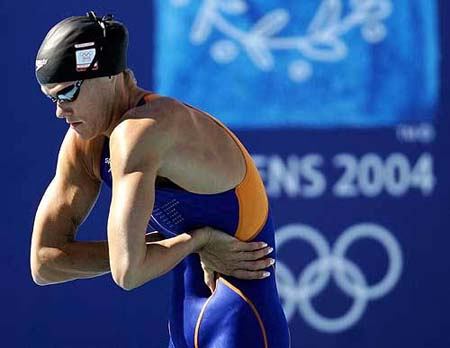
Before the gun goes, the best in the world are already opening up. A deep forward fold and loose hips let them set up the catch and hold body line without fighting their own range.
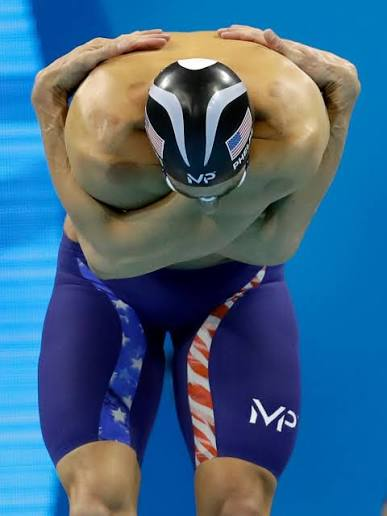
The most decorated swimmer alive built his stroke on shoulder girdle flexibility. The crossed-arm reach behind the head is a staple for a reason: it is the range that makes a high-elbow catch possible.
Over 40 stretches targeting the areas that decide how you move through the water, alongside general mobility work that benefits every stroke.
Plantar flexion and dorsiflexion work so your kick becomes propulsion instead of drag.
Open rotation and extension for a connected body line and a more efficient kick.
Overhead range and thoracic mobility for a faster catch and a longer, cleaner stroke.
Mobility work doesn't feel like training, and the payoff isn't immediate. But swimmers who commit to it consistently move differently: longer, cleaner, more powerful strokes, and fewer of the shoulder and hip issues that sideline so many athletes over a season.
This program is built for swimmers who want to own that process, not just tick a box.
Progressive stretches designed to build real, lasting range of motion. Follow the program as written, stay consistent, and trust the process.
Weeks 1–2
Wake up the key joints. Gentle, consistent three-days-a-week work that builds the habit and the baseline.
Weeks 3–4
Longer holds and deeper ranges. Ankles, hips and shoulders start to open in earnest.
Weeks 5–6
Loaded and dynamic variations that turn flexibility into usable, swim-specific range.
Weeks 7–8
Consolidate the gains. Lasting range of motion, not a temporary loosening before you jump in.
No guesswork. Every session is laid out with numbered stretches, sets, reps, hold times and rest periods so you just open the page and get to work. Here's a sample from the ankle work.
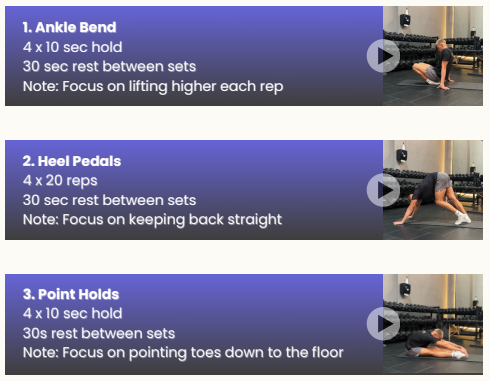
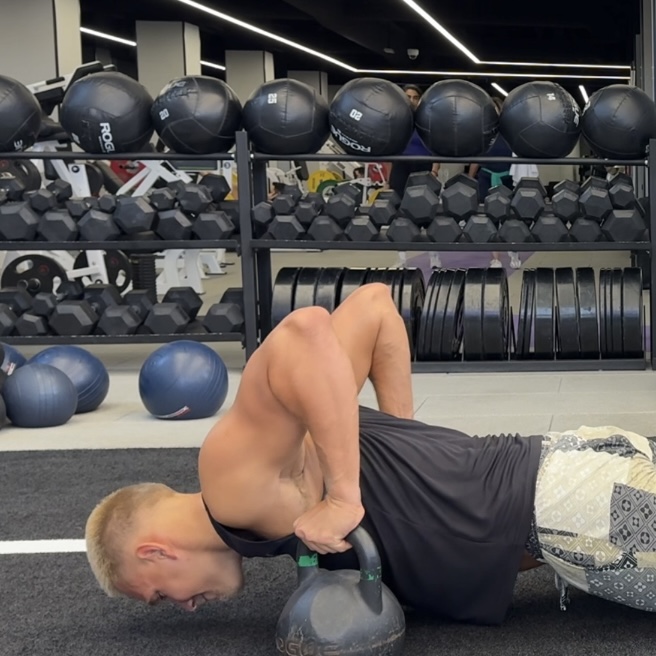
Never wonder if you're doing it right. Every exercise in the plan links straight to a short video demo, so you can see exactly how the stretch should look before you get into position. Tap the link, watch the form, then get to work.
No more guessing from a still photo or a vague description. The video walks you through the setup, the hold, and the coaching cues, so even stretches you've never done before feel familiar from rep one.